


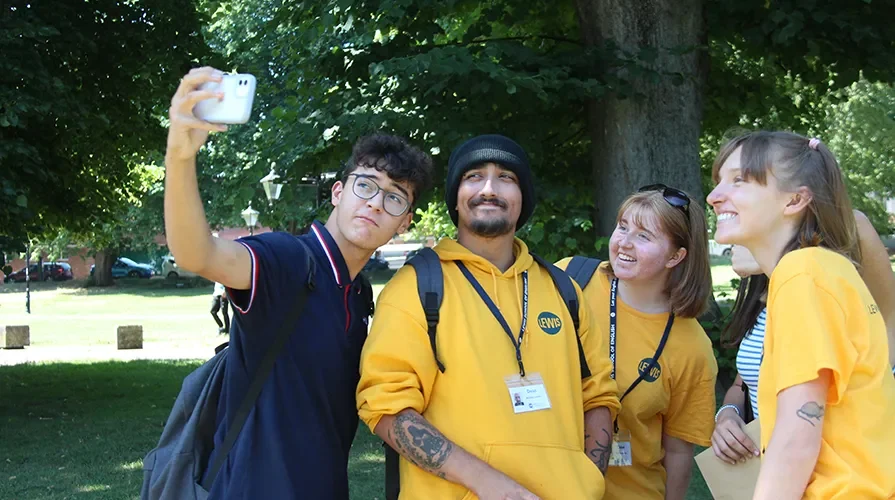
Welfare and Safeguarding on Junior Programmes
Your child’s welfare comes first
We understand that sending a young person to study abroad is an important decision. We want every student to feel safe, supported and included throughout their stay.
Our staff work closely with Group Leaders, homestay hosts and parents. Clear welfare and safeguarding arrangements apply during lessons, activities, trips, accommodation and free time.
The level of independence students have depends on their age, programme, accommodation and the situation. This page explains what parents can expect.
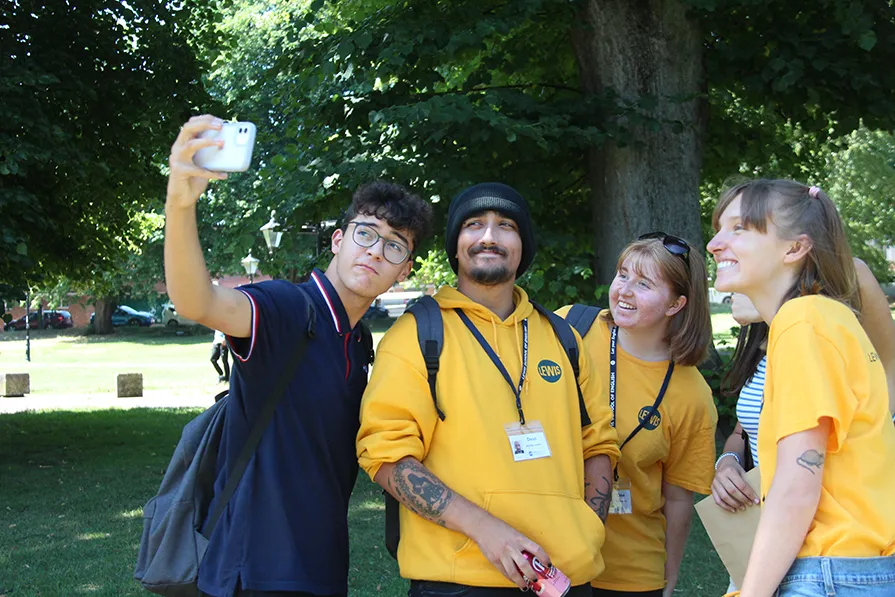
Welfare: key points
 Dedicated welfare support
Each centre has a Welfare Manager and a Designated Safeguarding Lead. In Winchester, both roles are held by the same person.
 Support for every student
We work closely with Group Leaders. Students who arrive without a Group Leader have a named Lewis Guardian who looks after their welfare.
 Supervised activities and trips
There is at least one Lewis staff member for every 20 students during organised activities and trips. Group Leaders provide additional support for the students in their own groups.
 Attendance checks
Registers and headcounts help us know where students are. Unauthorised absence is followed up quickly.
 24-hour emergency contact
Students receive an emergency number to save on their phone. This is also printed on their student card.
 Accommodation support
Residential staff are present in Winchester. In Southampton, we offer homestay accommodation with hosts approved by the school.
Welfare and safeguarding support
Students can speak to us about any questions or concerns, including settling in, health, friendships or accommodation. We encourage them to ask for help early so that we can support them quickly.
The Welfare Manager supports students with personal and practical concerns. The Designated Safeguarding Lead, or DSL, manages concerns about a student’s safety or possible harm. Concerns are taken seriously and passed promptly to the right person.
Group Leaders help care for their own students and work closely with Lewis staff. Students without a Group Leader meet their Lewis Guardian on the first day and receive regular support and check-ins.
All Lewis staff receive welfare and safeguarding training appropriate to their role. Homestay hosts and Group Leaders also receive relevant safeguarding guidance. Each centre has dedicated first aiders.
Before arrival, we ask parents or guardians to provide relevant consent, including for the student’s travel arrangements and for medical care if needed.
We collect emergency contact details for every student, so that we can contact a parent, guardian or other nominated responsible adult if necessary. These details are available to the member of staff holding the 24-hour emergency phone. We also ask for relevant medical, allergy, medication and dietary information.
During induction, students learn who can help them, the site rules and boundaries, and what to do if they feel ill, worried, late or lost.
Our Student Code
All students are introduced to a simple Student Code. They are expected to:
- treat other people with respect
- attend lessons and activities and arrive on time
- follow staff instructions and UK law
- stay in pairs or groups when required
- use mobile phones responsibly
- respect accommodation and other people’s property
- report problems or concerns
- follow the residence or homestay rules where applicable.
Most problems can be resolved through support and a reminder of the rules. Serious or repeated behaviour may be managed through our disciplinary procedures. Behaviour that creates a safety concern is also treated as a welfare or safeguarding matter.
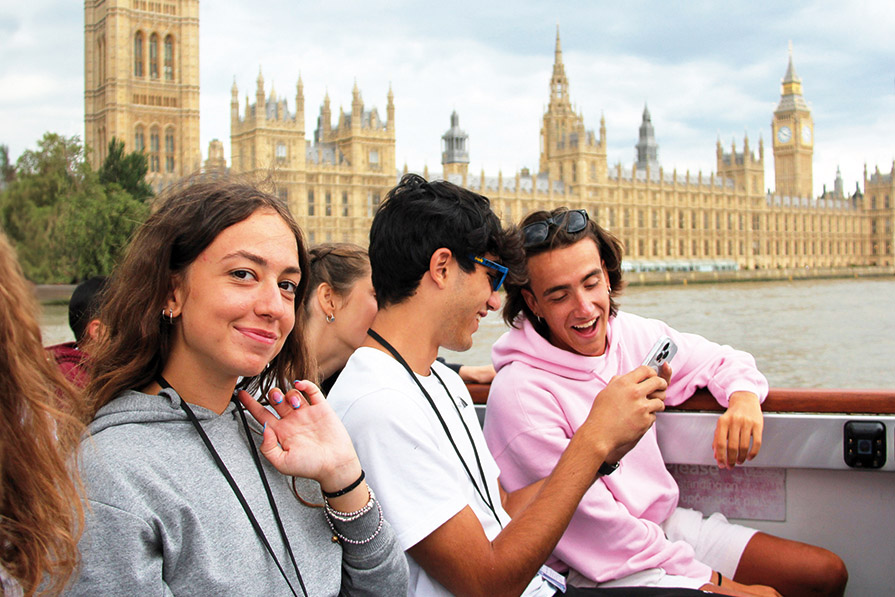
Lessons, activities and trips
Attendance at scheduled lessons, activities and trips is compulsory unless an absence has been agreed or the student is ill.
Registers are taken, and headcounts are used during trips and changes of location. If a student is absent or late without authorisation, staff contact their Group Leader or Lewis Guardian and begin follow-up immediately.
Activities and trips have at least one Lewis staff member for every 20 students, with extra supervision provided where needed. Group Leaders provide additional support for the students in their own groups.
Free time during trips
Most trips include some free time at the end, if the schedule allows. This gives students a chance to explore, shop or relax with friends within an agreed area.
- Under 13: students remain with an adult.
- Ages 13–15: students stay in pairs or groups and follow agreed check-in arrangements, normally at least once an hour.
- Ages 16–17: students stay in pairs or groups and are given clear boundaries, a meeting point and a return time.
Staff remain nearby and follow up immediately if a student misses a check-in or return time.
Arrival, departure and airport transfers
Before travel, parents, guardians or group organisers must provide full arrival and departure details and any required consent. Where Lewis arranges an airport transfer, we use approved transport providers and send clear meeting and contact information in advance.
Students travelling with a group are supported by their Group Leader and follow the transfer arrangements agreed for their group. Individual students receive direct meeting and contact information and are given additional support on arrival at the centre.
Students travelling alone are told how to identify their driver and what to do if they cannot find them. Where an airline’s Unaccompanied Minor service is required, we arrange the appropriate arrival and departure handover procedures.
On arrival, Lewis staff welcome students and provide the information they need for their first evening and following morning. Individual students are also introduced to their Lewis Guardian. Before departure, staff check the travel arrangements and help ensure that students have their passport, tickets and other important documents.
Full airport transfer information is provided in our Pre-Arrival Guide and transfer correspondence.
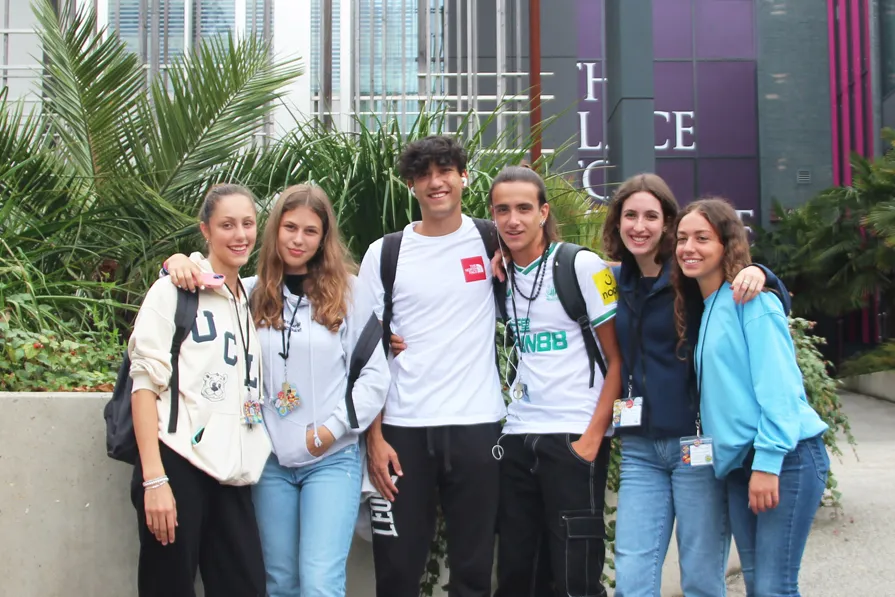
Winchester
Residence and campus welfare
Residential accommodation is on the University of Winchester campus, close to classrooms, activity areas and the dining hall.
Students have single en-suite bedrooms in single-sex flats. Groups are normally housed together. Individual students are placed with students of the same sex and a similar age. Room allocations also take account of welfare needs and any information provided before arrival.
Students must respect privacy and must not enter another student’s bedroom without specific permission. Residential staff are on site, with curfews, bedtime rules and overnight supervision. Residential Group Leaders are responsible for their own students’ whereabouts and welfare overnight and during downtime.
Students must be in bed by 22.45, with lights and screens off by 23.00. Campus security operates 24 hours a day.
A shared university campus
The University of Winchester is an active campus and may also be used by university staff, visitors and adult students attending a separate professional teacher-training course. Adult students have separate lessons, activities and accommodation and follow clear boundaries. Some facilities, such as the dining hall, may be shared, but junior students remain under Lewis supervision.
Chill-out time
Chill-out is scheduled free time when students can relax, study or socialise within the defined Lewis Zone.
It normally takes place:
- each day from 17.30 to 19.00
- on Tuesdays and Saturdays from 20.00 to 21.30.
Students are not continuously accompanied during chill-out. Lewis staff patrol the area, and students must remain in groups of at least three when outside the residence.
Permission to leave the campus
Students aged 15 or over may sometimes visit Winchester city centre during the chill-out (free time) period before dinner, or on Sunday morning or afternoon.
The permission forms are available in the Lewis Summer app and in our Pre-Arrival Guide. Permission requires:
- a parent or guardian to complete the free-time permission form
- the student to submit a request each time they wish to leave the campus
- a Lewis manager to approve that request.
Students must stay in a group of at least three, keep their phone switched on and return on time. Permission is not given during evening chill-out.
A student aged 15 or over who is staying outside the Lewis residence may exceptionally be allowed to travel independently to and from the centre. Written parental permission, Lewis approval, an agreed route and clear arrival-confirmation arrangements are required.
Southampton
Homestay welfare
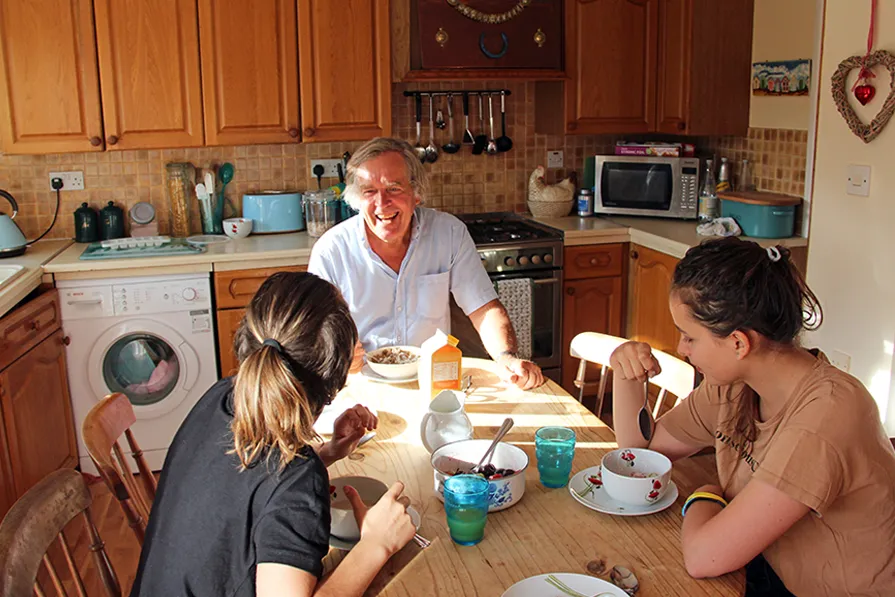
Southampton junior students stay with approved homestay hosts. Hosts are regularly inspected and provide references, and all adults normally living in the home complete DBS (police) checks. Hosts also receive information and guidance about caring for students under 18, and complete safeguarding training.
Hosts provide meals, a home environment and day-to-day support outside programme hours. Students should contact Lewis if they have any concern about their homestay.
A shared school site
Our Southampton school is also used by adult Lewis students and by Sterling Training, a separate training provider primarily based in a separate building. Adult and junior programmes are managed separately. Break times are staggered, activities are separate, and junior students are supervised during lessons, activities and breaks. Sterling Training staff and visitors are clearly identified, and Sterling staff work in separate areas. If junior lessons take place in the same building, students remain in agreed areas under Lewis and Group Leader supervision.
Travel between the homestay and school
Most students travel by public bus.
The host accompanies the student on the first morning and explains the route, correct bus and stops. After this, students normally make the journey without the host travelling with them.
At the end of the programme day, Lewis staff help students board the correct bus. Students must message their host when they are safely on the bus and travel directly home.
An adult must be at home when a junior is due to return, as junior students are not normally given a house key. If the host is unexpectedly unavailable, the student should call Lewis. Staff will support the student while arrangements are made.
If a student does not return when expected, the host contacts Lewis and the student’s whereabouts are followed up promptly.
Students aged 15 or over may have authorised Sunday free time in Southampton when the required parental permission and contact arrangements are in place.
Health and emergencies
Students should tell a member of staff, Group Leader, Lewis Guardian or host if they feel ill, are injured or need support.
Depending on the situation, we may provide first aid, arrange a place to rest, contact NHS 111, arrange medical treatment or call 999. Parents, emergency contacts and Group Leaders are informed where appropriate.
Each centre has a 24-hour emergency number. For individual bookings, we send the number to parents or guardians in our pre-arrival emails. For group bookings, we send it to the agent or group organiser, who is asked to pass it on to parents or guardians. The number is also printed on the student card or lanyard and included in student information. Students should save it on their phone before travelling.
Students should use it if they are lost, in difficulty or unable to contact their normal adult. If they have no working phone, they should go to a shop, station, information desk or public building and show their student card.
A student who cannot be accounted for is treated as a safeguarding concern from the start. We follow the relevant missing-student procedure and contact parents, hosts, Group Leaders, police or emergency services when appropriate.
Phones and digital safety
Phones can help students access programme information and contact staff. During lessons and organised activities, phones must normally be put away unless staff give permission.
On trips and during permitted free time, students should keep their phone charged and switched on where possible. However, students are not disadvantaged if they cannot use a phone. Essential information is also available from staff, noticeboards, printed timetables and student books.
Students must ask before taking or sharing photos and videos. Photography is not allowed in bedrooms, bathrooms, changing rooms or other private areas. Harmful messages, bullying and inappropriate image-sharing are treated seriously.
Parents may opt their child out of appearing in school publicity, including on social media. Students are also given the opportunity to opt out on arrival.
Year-Round Programmes
For welfare information related group programmes outside the summer season, please contact us for details.
More information
Our Pre-Arrival Guide contains more detailed information about travel, arrival, accommodation, health, school rules and who students should contact for different types of help.
Read our Junior Summer Pre-Arrival Guide
Read our Junior Year-Round Pre-Arrival Guide
You can also read our Safeguarding Policy and other school policies online.
Questions about your child’s welfare?
Please contact us before booking or travelling if you would like to discuss medical needs, additional support, accommodation, supervision, free time or any other part of the programme.







Leave a Reply